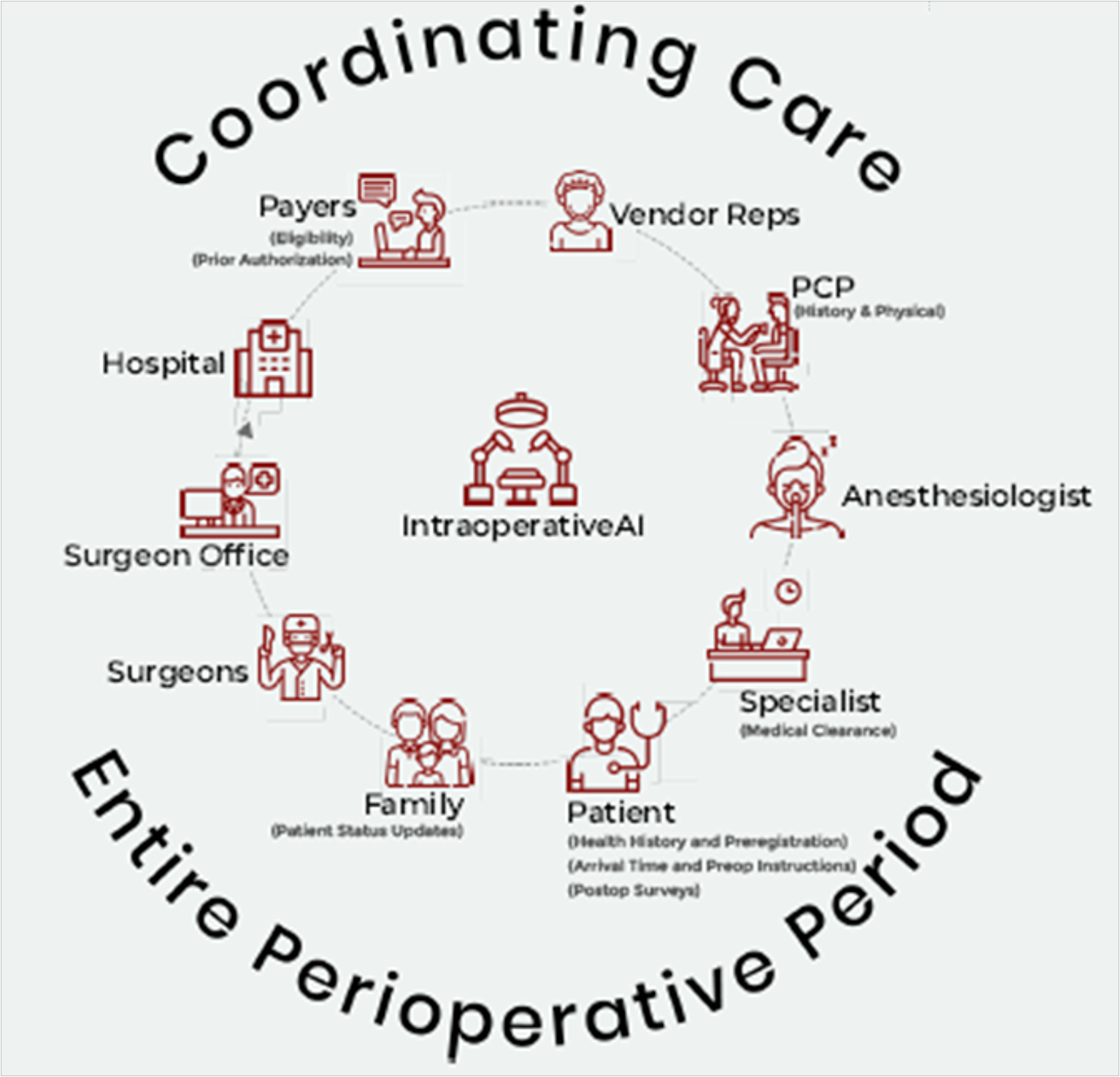
Coordinating Care Across the Entire Perioperative Period
Augustus HCS partners with HealthNautica to bring providers and hospitals eORders - a web-based, Electronic Health Record (EHR) agnostic software platform covering surgeries, procedures, and diagnostics, built for ease-of-use, customizability, and high availability.
The end goal is to ensure perioperative and procedural profitability by improving Operating Room (OR) utilization, ensuring reimbursement for services rendered, and enhancing operational efficiencies to reduce labor costs.
eORders has demonstrated a voluntary provider office adoption rate greater than 90%, up to 4X improvement in facility scheduling efficiency, a 50%-90% reduction in unwarranted 24-hour cancellations, and 2%-10% growth in surgical volumes.
eORders is not a scheduler or a scheduling system. It's an External Bridge to provider offices that begins with a friction-free, 2-minute booking experience, a clinical and financial validation engine, and a compliance filter that sits in front of the hospital's EHR - ensuring every case request going into the EHR is clean, complete, and cleared for payment.
Preoperative: The "Gatekeeper" Role
The preoperative period is where the success or failure of a surgical day is determined - a high-stakes process that begins the moment a surgeon decides to operate. eORders divides this period into four parts:
- During Case Initiation - Mandated fields and cross-field dependency validations guarantee data integrity and prevent back-and-forth phone calls. Provider availability is checked automatically, and eORders encourages the use of approved/contracted implant and equipment vendors, notifying vendor representatives automatically. Built-in Revenue Cycle Management (RCM) edits by the Centers for Medicare & Medicaid Services (CMS), state, and commercial payers ensure payer compliance and full reimbursement.
- During Case Confirmation - Resource constraints are checked before a case is confirmed by the facility's OR scheduler, driving up to 4X improvement in facility scheduling efficiency.
- After Case Confirmation - Two-way text communication between Pre-Admission Testing (PAT) staff and patients drastically reduces manual call volume. Automated scheduling, comorbidity management, Prior Authorization initiation and completion, and patient readiness tracking ensure labs, diagnostics, and hospitalist evaluations are completed more than 3 days prior to surgery, per the CMS 72-hour rule.
- Day-before Day of Surgery (DOS) - Automated patient engagement delivers preoperative notification and arrival time, while automated provider engagement delivers the following day's line-up.
Intraoperative: Real-Time Case Tracking
Once the preoperative phase is successfully concluded and the patient is registered, real-time patient tracking with Real-Time Location System (RTLS) technology comes into play. It gives the surgical team a shared view of case progression, reducing the need to chase updates, interrupt the team, or rely on verbal check-ins - resulting in a more stable, coordinated OR environment that fits within existing workflows.
Postoperative: Closing the Loop
eORders' impact doesn't stop once the patient leaves the OR. In the postoperative period, eORders serves as the critical data-capture and quality-reporting bridge that allows hospitals and Ambulatory Surgery Centers (ASCs) to prove their value to payers and regulators. All communication is digital and automatically adapts to any device - computer, tablet, or smart phone - in use by the patient.
- Quality Reporting - As payers increasingly shift toward Value-Based Care, eORders automates the collection of quality measures such as the National Surgical Quality Improvement Program (NSQIP), the Metabolic and Bariatric Surgery Accreditation and Quality Improvement Program (MBSAQIP), and Patient-Reported Outcome Measures (PROM).
- Clinical Continuity and Enhanced Recovery After Surgery (ERAS) Support - Postoperative instructions are delivered directly to the patient's cell phone and/or email so the recovery plan is always accessible.
- Patient Satisfaction Surveys - Customized surveys are automatically delivered to the patient's cell phone and/or email for easy online completion.
- Closing the Referral Loop - Postoperative notifications are automatically triggered back to the referring provider (e.g. a Primary Care Physician) to strengthen the relationship between the hospital and its referral base.
Trusted and Proven
Designed for ease-of-use, customizability, high availability, and scalability:
- 50+ hospitals and Ambulatory Surgery Centers (ASCs)
- 400,000+ surgeries and procedures per year
- Representing over $10 billion in value
- Over $40 million saved via reduced unwarranted 24-hour cancellations
- Over $80 million saved via built-in, automated RCM safeguards
- Over $50 million in additional revenue from surgical volume growth
- Over 45 man-years saved in OR scheduling
- Over 180 man-years saved in Pre-Admission Testing (PAT)

Ready to see how eORders can improve OR utilization and reimbursement at your facility? Contact us now